Category Archives: Existing photo processed by Bob Lawrence

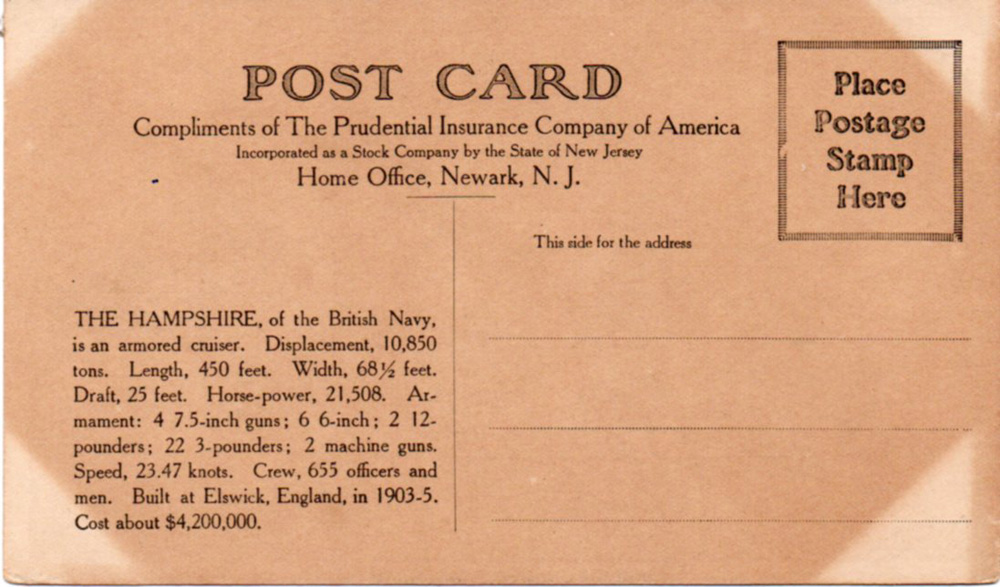
English Cruiser “Hampshire”

hampshirefront hampshireback

The cruiser was launched in 1905.  This card dates from around 1910.  The cruiser was lost in a U-boat-laid minefield off the Orkney Islands on June 5, 1916.  643 men, including Lord Kitchener – on a diplomatic mission to Russia, were lost.  Twelve survived.
The front shows some fading but the overall condition of the card is very good.  Apparently, it was kept in a common picture album.  The browning on the back is probably from the acidic stock of the album pages.

The Prudential Insurance Company issued quite a few postcards around this time, but this one could be an R3.  It’s available on the web for around $20, in mint condition.
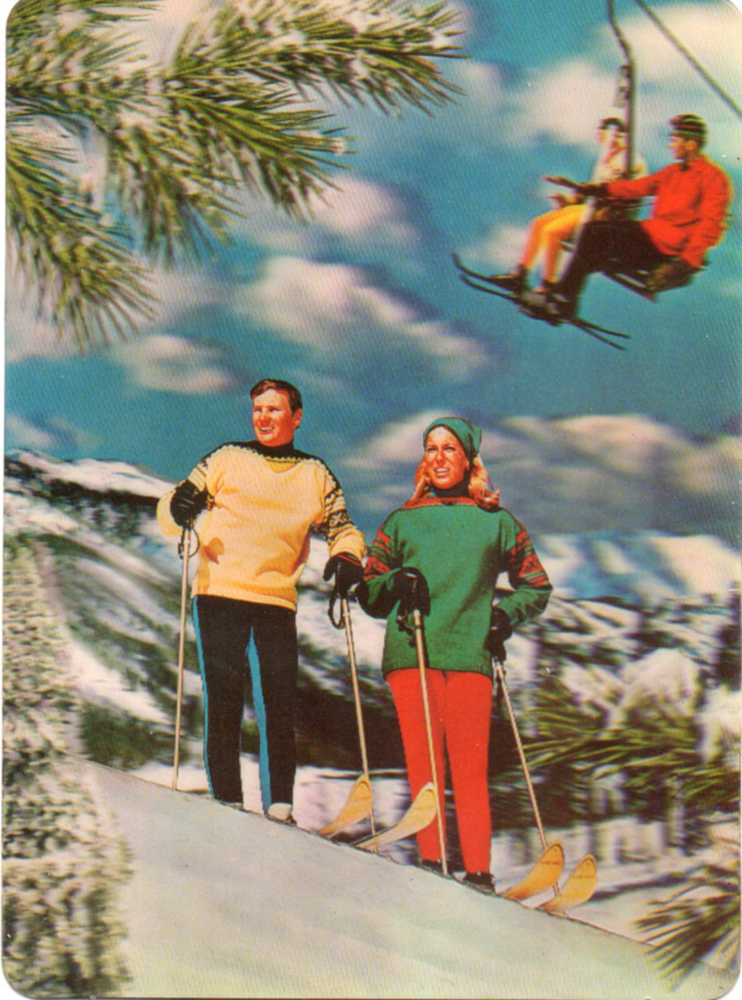
3-D Post Card

skiiersfront skiiersback

Well, it’s kind of 3-D.  But it’s more a bit of 2-D fakery.  There are two planes in this lenticular post card (parallax panoramagram, a word that’s as delightful as “bananarama”), the front one with the pine needles, the perplexed-looking skiiers, and the two riding the lift.  The second layer is the background.  Moving the card gives a feeling of 3-D, if you’re a kid and have never seen 3-D before…

Anyway, it was published by the Manhattan Post Card Company, in business from 1928 to 1974.  The Xograph process was patented in 1964 (the patent expired in 2008).  It’s 6.5 x 4.75″.

A friend of mine found four of the these 3-D Collector Series cards at a garage sale.  On the market today, they’re worth about $2.00 each.

Avianca 720-B

677front 677back

Avianca Boeing 720-B.  The plane left Boeing in 1961 for Lufthansa, then to Pan-Am and, in 1973, to Avianca.  Avianca moved it on to SAM Columbia in 1977 and, after a stint of private ownership, it was scrapped in 1980.  Its tail number here is HK-677.  HK-677 for Avianca was previously carried by a C-47 that edged off the side of the runway on takeoff in the 60s and caught fire.  All passengers got out safely, but the plane went out of service.

The center credit line on the back shows this is a Banco de fotografias Movifoto out of Medellin.  The card size is Continental (103 mm x 150 mm) (4″ x 6″ sort of).

A Dude

dude dudeback

This guy’s a dude.  Note the scarf tie, popular in the 1920s.  Driving cap in plaid, striped shirt. Sleeves rolled up.  Good shoes.  Odd expression, but photography was still new then.

I haven’t a clue as to where this studio photo was taken.  However, it’s a Real Photo and the AZO square (on the back, upper right)  with two triangles pointing up and two triangles pointing down indicates that the photographic paper was made between 1918 and 1930.

You go, guy.

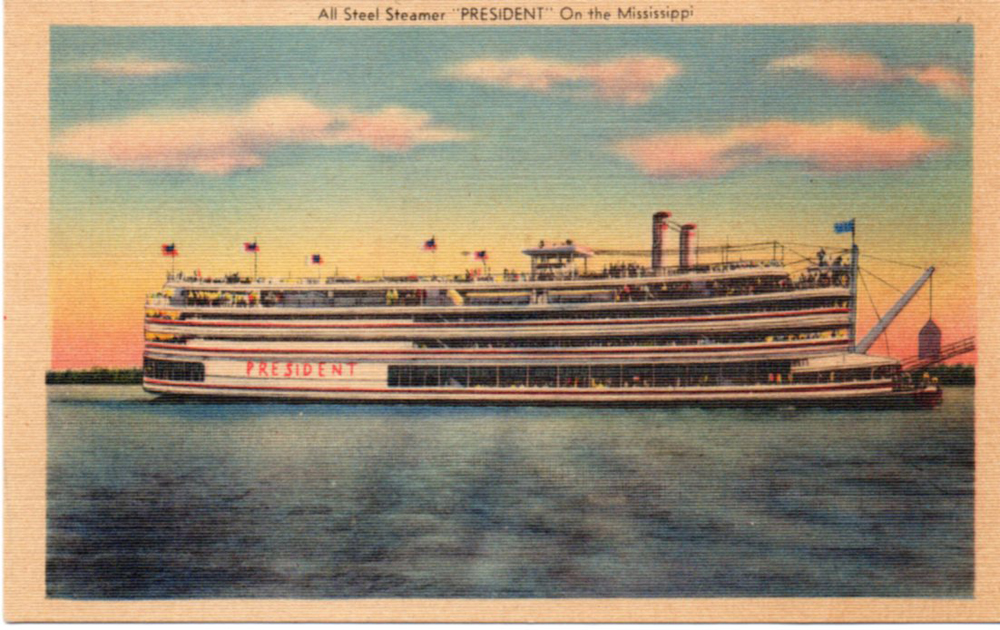
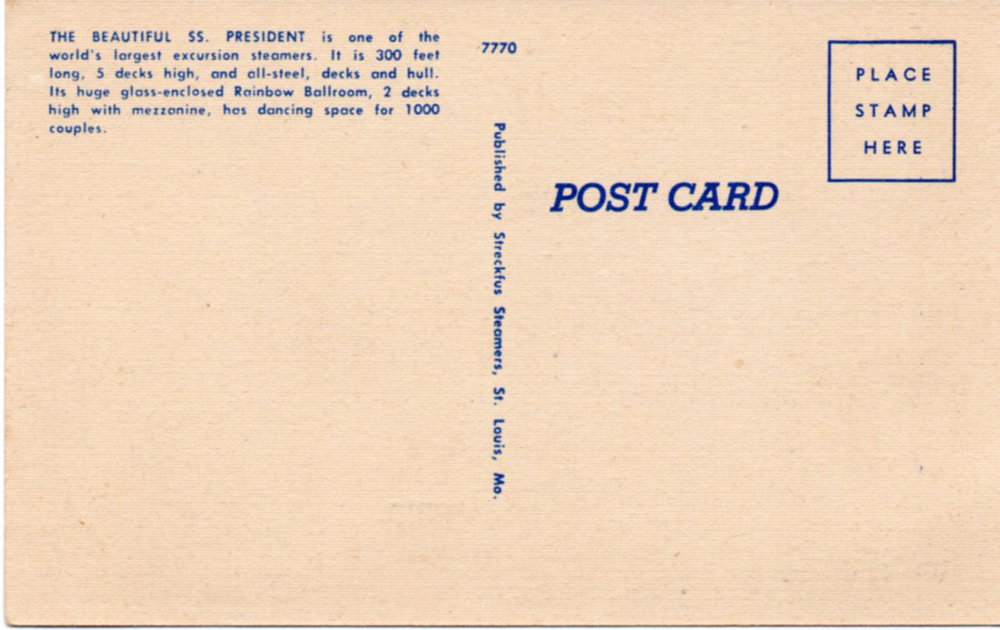
All Steel Steamer “President” On the Mississippi

presidentfront presidentback

This actually is a riverboat named “President”, but this picture of it was taken after 1978, when it was converted from steam to diesel and had some other modifications made.  What’s left of the old boat under all that steel came together in 1924 as a packet boat called “Cincinnati”.  It originally had side paddle wheels.

The center credit line “Published by Streckfus Steamers, St. Louis, Mo.” is just the name of the company that owned the boat.  I have no idea who printed it.

The boat, at last noticed, was lying dismantled in St. Elmo, IL.

El Al 707

elalfront elback

The mighty Boeing 707, delivered to El Al in 1965 and retained in service for decades.  This 707 is sporting the 1960s livery (there is some wacky information on the web about the dating of this card). The card is a company issue, printed in Israel.

Cheers, Speedbird!

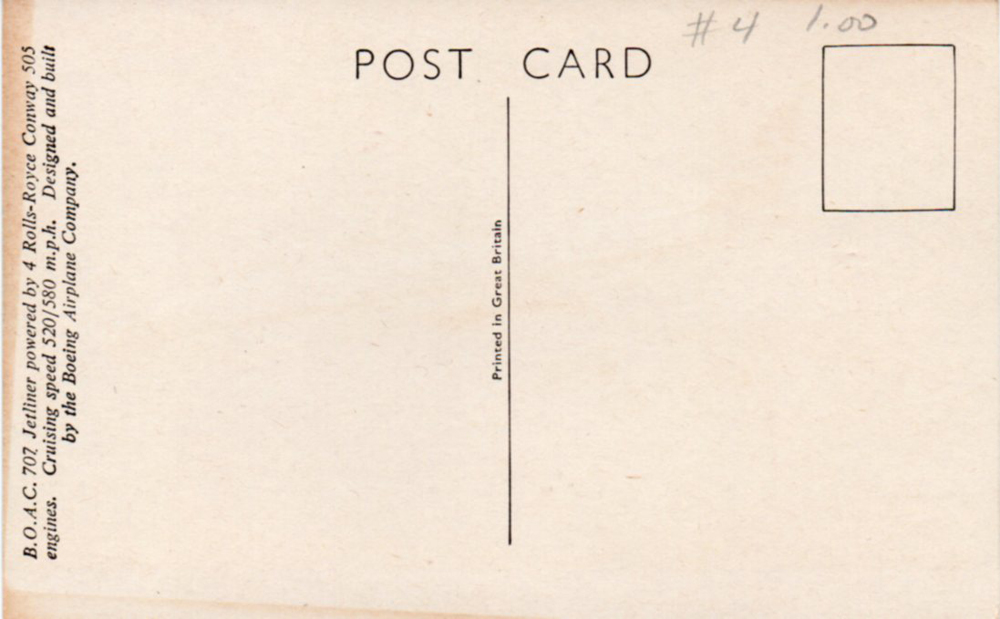
boacfront boacbck

British Overseas Airways Corporation, incorporated from Imperial Airways and British Airways in 1940.

“Speedbird” was B.O.A.C.’s callsign until 1974, when B.O.A.C. was folded into British Airways (callsign: “Speedbird”).

This is more than likely a Boeing 707-420 with the Rolls-Royce Conway 505/508 turbofan engines.  The card dates from the early 1960s or so, when B.O.A.C. began adding the 707-420 to the fleet.

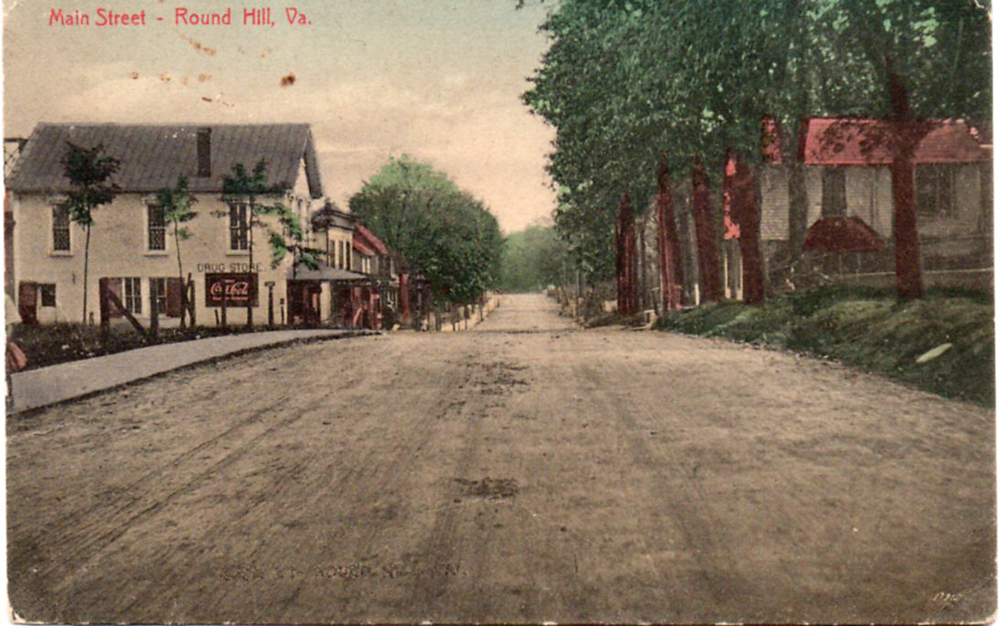
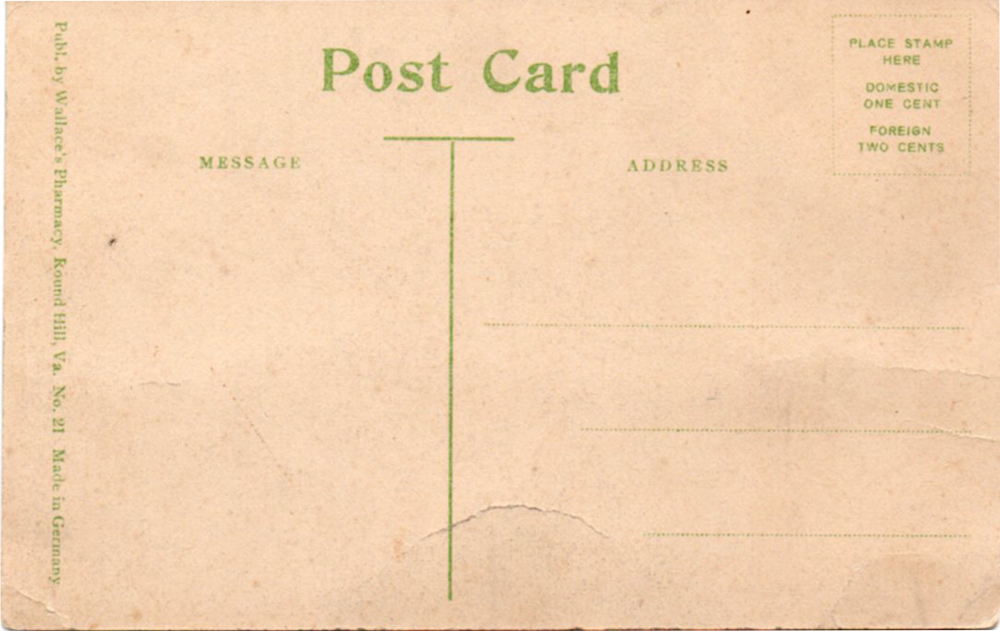
Round Hill VA

roundhillfrontroundhillback

Round Hill VA came about in 1900 as a terminus for a railroad line.  The town is on Hwy 7, NW of Washington D.C.
This card is well over a century old.  It is one of those fine, German-printed cards from before the start of WWI.  A broad, general guess would put it to 1910 or so.
On the back: Publ. by Wallace’s Pharmacy, Round Hill, Va. No. 21 Made in Germany
That’s Wallace Pharmacy with the Coca-Cola sign on the left.  The card is in pretty good shape for its age.

Jolo P.O.

jolopo

Just a bunch of wild and crazy guys there in the Jolo P.O. (with lots of cautionary signs, too)

Photo by Lee Stone

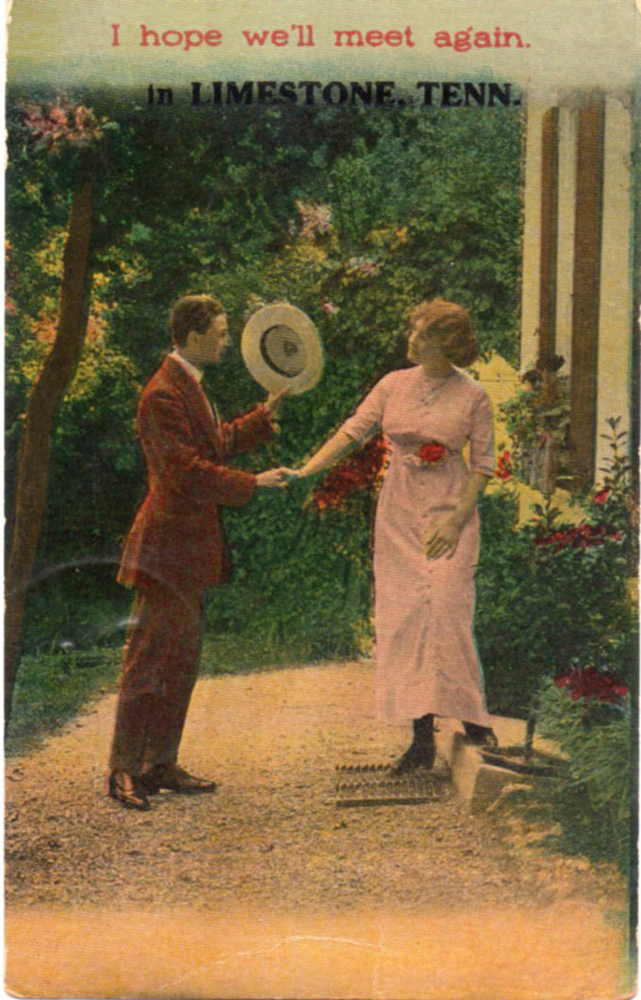
I Hope We’ll Meet Again in Limestone, Tenn.

limestonefront  limestoneback
This is a generic card with the town overprinted.  The postmark is from Limestone on January 28,1915.  Limestone’s had a post office since 1858, seventy-eight years after Washington College Academy was founded there.  Before the Civil War, Limestone was called “Anthem”.

On the back, the credit line on the left reads: Holmfirth Bamforth & Co. Ltd, Publishers (England) and New York. Bamforth’s Locals

The Message reads: “Hello! Guess Who?”  (I thought this was printed on the card, but the ink is smeared on the exclamation point)  The card is addressed to Miss Sarah Stonecipher, Limestone Tenn.  The same lady received the card in the previous posting.  Not particularly surprising, I found both of these in Limestone.

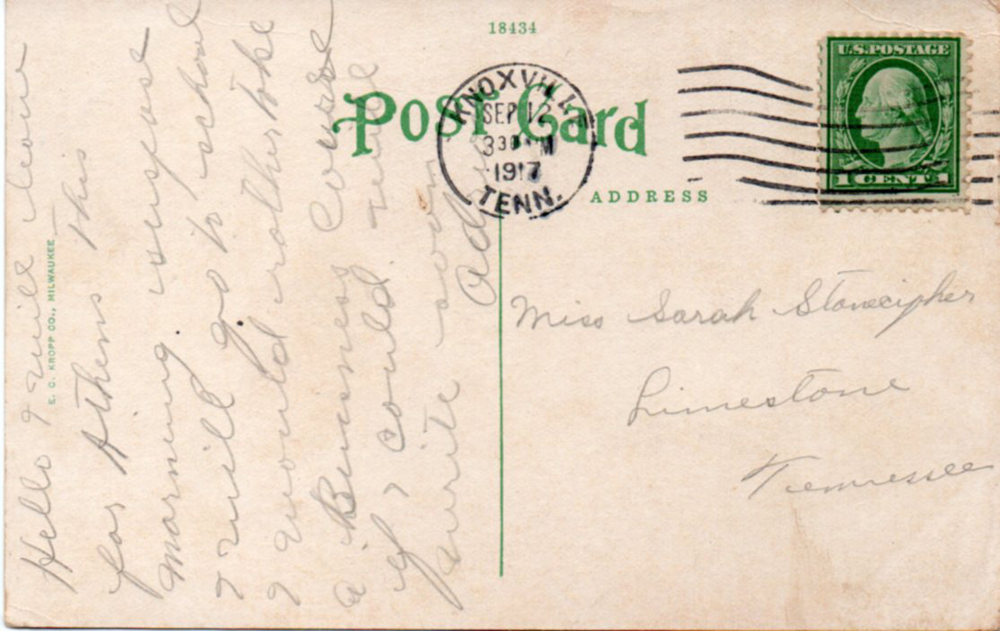
Deaf and Dumb School, Knoxville, Tenn.

knoxschoolfront knoxschoolback

This building, on Summit Hill Drive in Knoxville, was built in the 1840s.  In 1925, it became Knoxville’s Old City Hall.  The building currently houses a law school for Lincoln Memorial University.

The postmark is September 12, 1917, mailed from Knoxville.

It was mailed to a Miss Sarah Stonecipher in Limestone TN.

It reads, as best as I can tell, “Hello I will leave for Athens this morning. (suppose?) I will go to school I would rather take a Business Course if I could Will write soon. (Adrian?)

Published by E. C. Kropp of Milwaukee, inventory number 18434

Natural Tunnel 1937

nattunn

nattunback

1937.  Same tunnel, same tracks.  Yawn.  Geology is so slow.

Knoxville Train Stations (there were two?)

knoxstns
knoxstnsback

On the front of this postcard are the Southern station (top) and the L&N station.  The Southern station dates from 1903; the L&N from 1905. They’re both still sitting around in K-ville, but repurposed.  Passenger service persisted until around 1970.
The postcard is a Tichnor Duality Views, published by Standard News Co., Knoxville, Tenn, and dates from the 20s.  I don’t have a way to tie an inventory number to a date (there’s not much of anything about Tichnor Publishing Company – they were in Boston – on the web), but the cars look to be 20-ish.  It has to be from before 1945, since the clock tower on the Southern station was removed in that year.
I won’t say anything about the dealer writing his/her booth designation and price ON THE CARD.  Wouldn’t do any good.

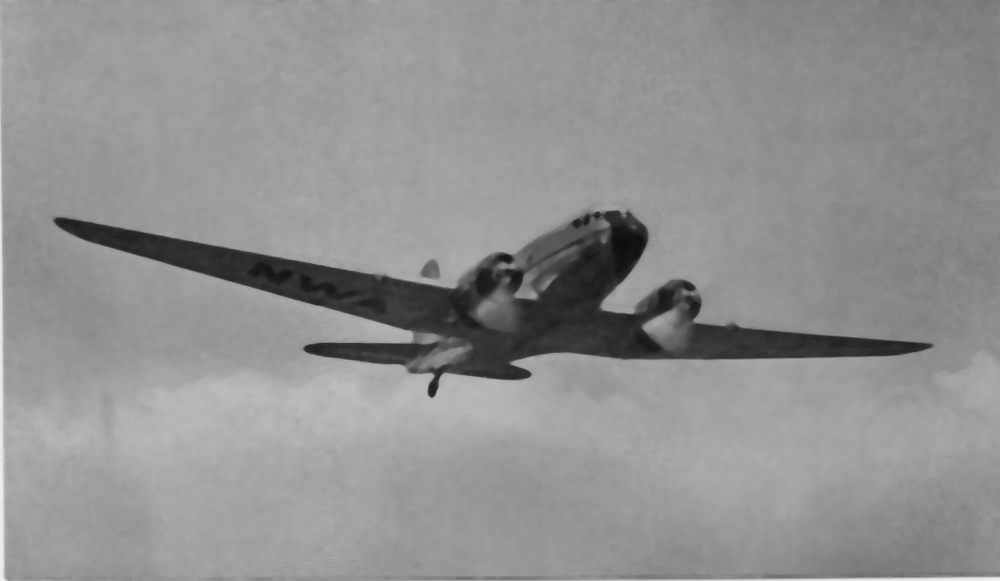
Northwest Airlines

nwaaloftfrontnwaaloftback

nwatarmacfrontnwatarmacback

These are two cards that were probably in a folder given to each passenger as they boarded the plane.  You added your message to and address of your BFF back home, give it to the stewardess.  She would then affix a stamp and mail it for you.
They are DC-3 aircraft in NWA livery (at one time, pretty much any airport worth its tarmac had a DC-3 landing there).  Later, NWA became Northwest Orient, flying to Japan and other points oriental.  “Northwest Orient” makes me think of elk and soy sauce…

NWA was around from the late 20s, then was absorbed, eventually, by Delta.

Nickels Department Store, Gate City, VA.

nickelsfront

nickelsback

The writing is all in pencil.  The postmark is double stamped and blurry.  The interesting thing is that the card, in the upper left, is dated “Feb. 2, 1912”, but the postmark shows it was mailed on January (something) 1912.
Reading on: “Hurry answer soon  Hello Hazel how are you by this time I am just fine and having a fine old time tell Bess to send me a card will be home in next month”  The author was not big on punctuation.
Mailed to Miss Hazel Lessley, Arcadia, Tenn. Arcadia, formerly known as Reedy Creek Settlement, is one of the earliest clumps of humanity along Bloomingdale Road.  We always used to call it Bloomingdale Pike (indicating at some time in the past it was a private road…you had to pay to have the pike across the road lifted so you could get through).

Anyway, there are 36 men, women and children all lined up across the front.  The photo was maybe taken in April or May, since the people aren’t wearing winter clothes and there’s some sign, perhaps a circus sign, in the show window to the left advertising an upcoming May 30 performance.

As is common with cards of this vintage, there’s no publisher name shown.  There may be an inventory number or other information under the stamp, but I’m not even going to try to steam it off.

Andrea Doria

andreadoriafrontandreadoriaback

This is the Italian liner SS Andrea Doria.  The Continental-size (4-3/16 x 5-7/8″) postcard was mailed from Gibraltar on January 17, 1955.  One year and seven months later, this ship went to the bottom, 160 feet down, off the coast of Massachusetts, after a collision with the MS Stockholm of the Swedish American Line.  The story is here.

Mary Jayne’s Railroad Specialties

mj356front mj356rev

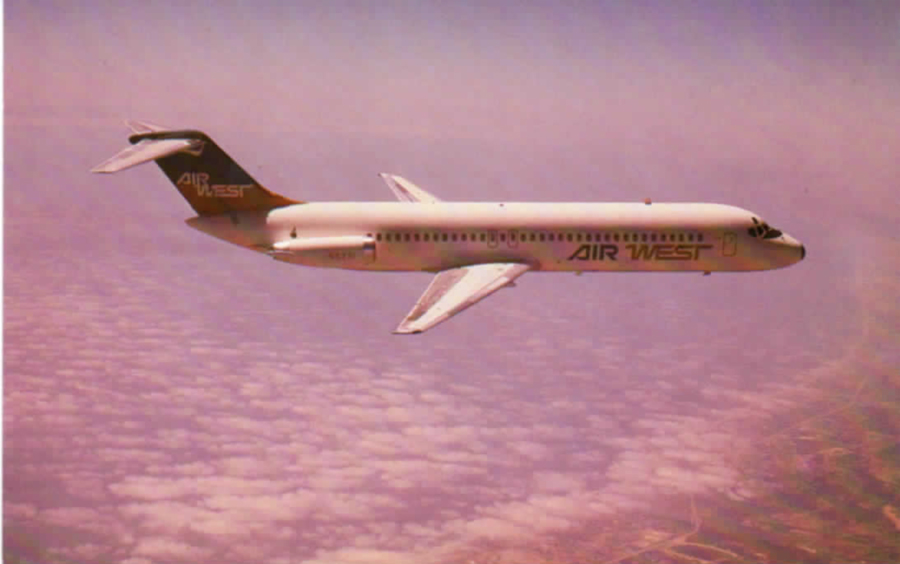
Mary Jayne’s Railroad Specialties…and an airline?  This is the lowest inventory number I have of the airline series that MJRS issued between the mid 80s or so through to the late 90s.  The company was owned by Mary Jayne and John Z. Rowe of Covington VA.  The MJRS company was incorporated, though, in North Miami Beach FL in 1973 and went inactive in 1999.  Mary Jayne died in 2015 but her obituary doesn’t mention MJRS.  It only states that she and her husband operated a land survey company.  There’s an article in a railfan mag on the web on MJRS, but it’s stuck behind a $43 paywall.  Passed on that.  There is no inventory list of these cards on the web, as far as I know. This is MJ354 and my highest number is MJ1297, but this isn’t a continuous sequence. There are many holes in the numbering.  Either I just don’t have all the cards (likely) or these cards, which changed publisher at least once, were part of a larger print run that included other subjects.  This one was printed by Alleghany Publishers, Covington, VA.  I hope the pinkish hue was intentional.
The cards I have cover an amazing number of airlines and many, many aircraft.  This group was a real find.

Alf Berry

photo1

photo2

So, here’s Alf.

In the writing on the reverse, there’s one word that I can’t figure out.  It’s the word written over the “P” in “Post”.

Alf Berry picture gave to B (?oo?) B feb 27, 1913 at Roda Va”  Roda is a coal town in Wise County, at the end of what was once an Interstate Rail Road line.  It’s northwest of Appalachia, past Osaka.

Interesting that the person writing this added the “Va”.  It was never mailed.  The writing just serves to identify the person and give a context to the picture itself.

Alf’s not wearing any rings.  The buttons on his jacket have been much used; they’re hanging loosely.  Sturdy shoes.  Looks like some sort of basket hoop by his right foot.  Can’t say much about his tie.

The other writing is when some dumb dealer wrote his buy code and the price of the card.  I wish dealers wouldn’t be so unconcerned about these real photo cards.  They’re one-offs, after all.

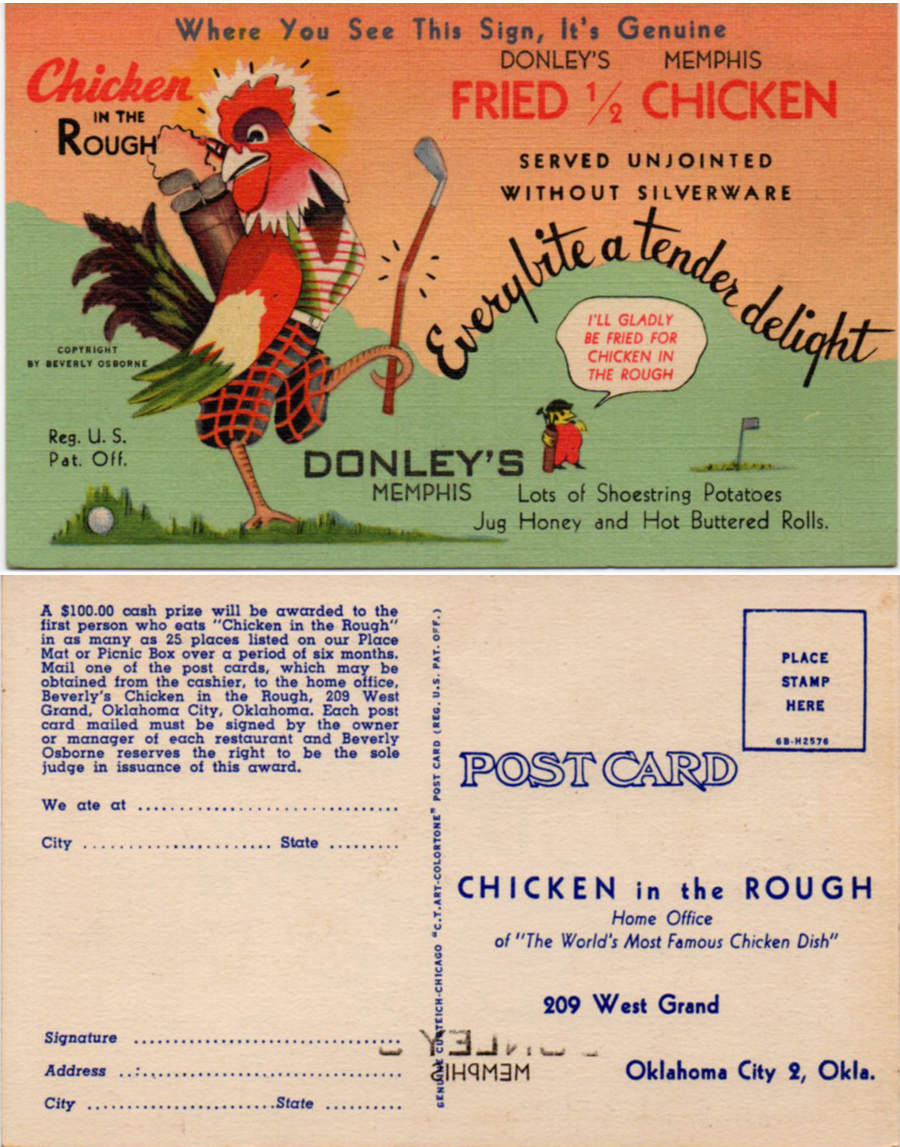
Before KFC, there was

Posted on

cinrboth

This was the first nationally franchised restaurant chain in the United States.
Chicken in the Rough (you ate it without silverware). Read about it here.

This card is from their Memphis location.  I wonder how many people won the $100 cash prize?
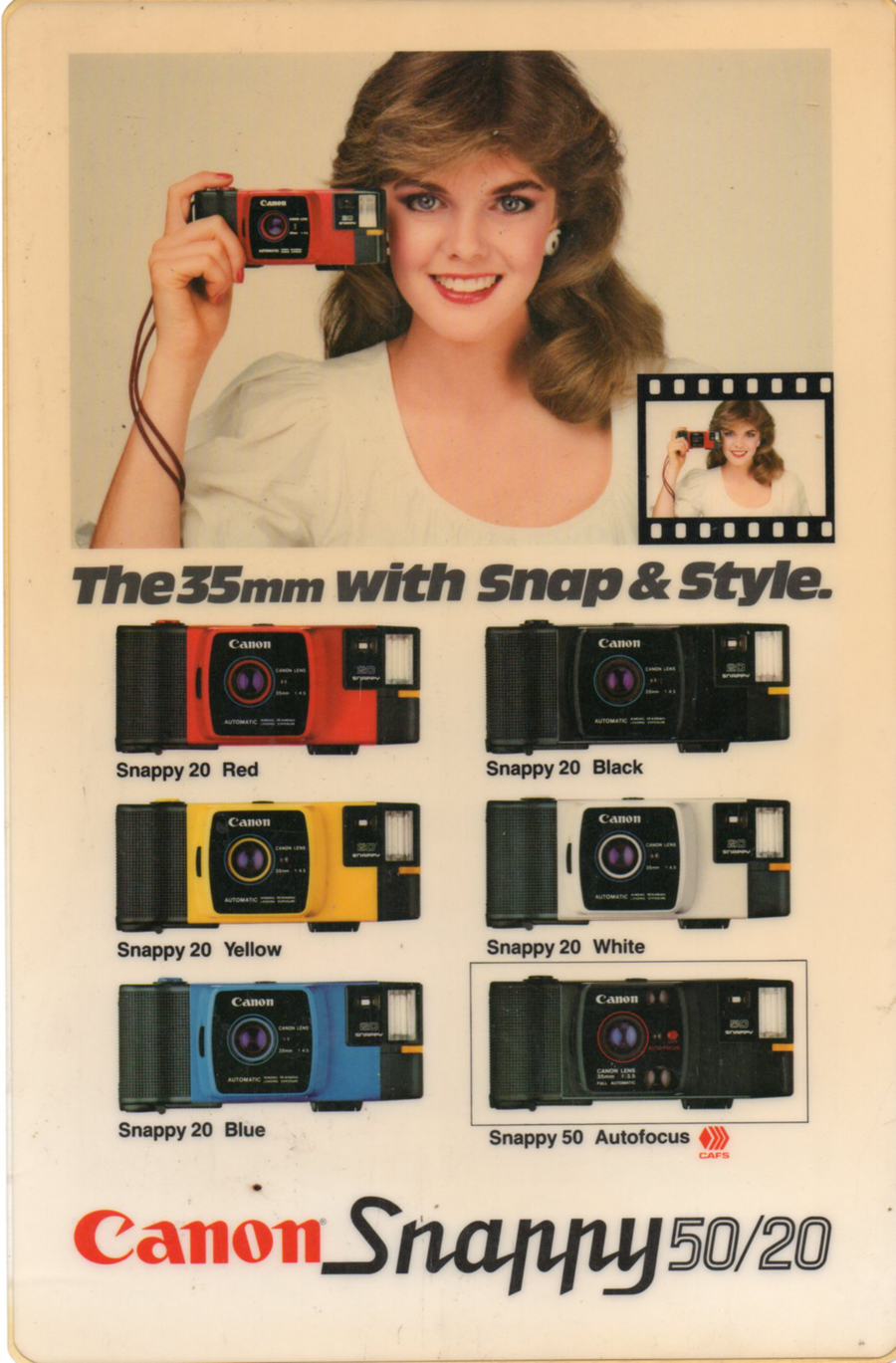
Canon Snappy

Posted on

This is a counter card for camera shops to advertise the then (1982-83) new Canon Snappy 20 and 50.
canonsnappyfront canonsnappyback

It shows damage from sunlight, otherwise this sturdy plastic card is in pretty good shape.  The item measures 10.5 x 7″.
This first outing for the Canon Snappy series in the United States came in September, 1982.  It cost $72 ($186 or so in today’s dollars).  The Snappy 50 had autofocus.  Which means that, just before you hit the shutter button, a measuring tape would spit out of the front of the camera, so you could measure the distance to the subject.  It was unusual for its day in that the measuring tape would extend to 5,280′, at sea level.  Just kidding, of course.  It was an infra-red system, common in compact cameras then.  Thank you, Google.