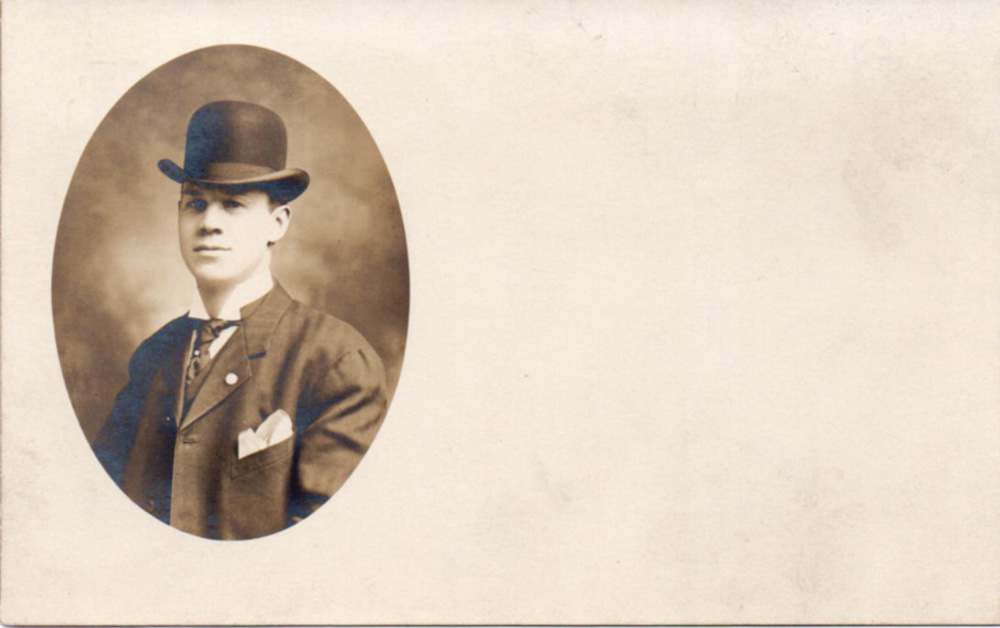
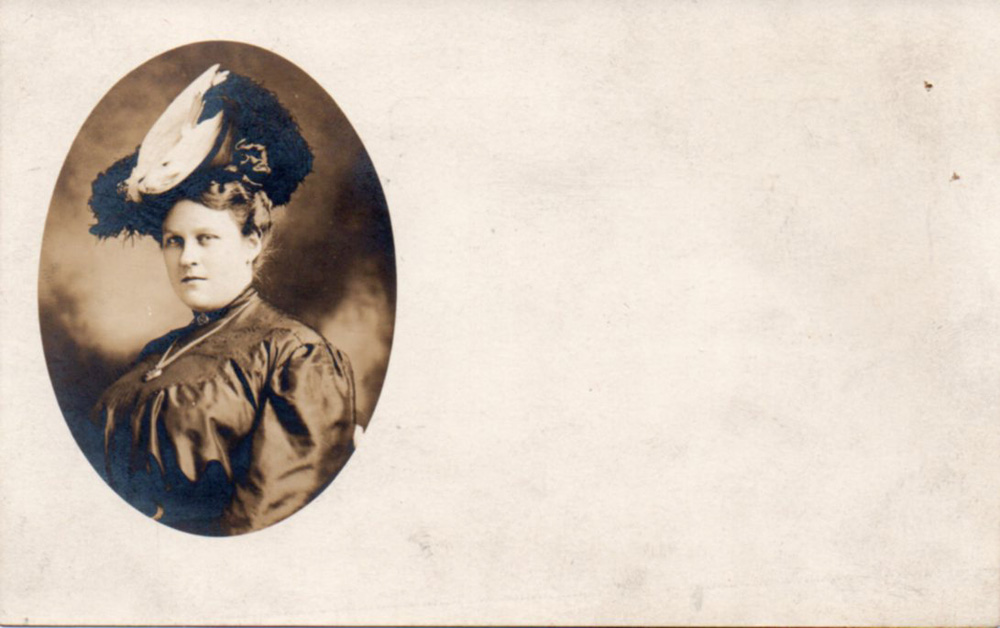

I can’t tell you who this stylish couple is. I can’t tell you where they lived, but I can tell you when the photos were taken, within a 4-year period – 1903 to 1907.
The paper these real photo post cards are printed on is an Ansco product called Cyko. The process of the printing is chlorobromide, yielding a warm brown tone. Cyko came on the market in 1903 and the undivided-back era ended in 1907, when the Universal Postal Conference agreed to allow a message area on the left side of the back, not just the address. There’s probably a little slippage on the end date, since, as far as I can tell, the U.S. Post Office didn’t ban these backs, just let them fall out of favor.
The blank area to the right of each picture was there for a message of some sort. These are either one-offs or part of a very limited edition.


This linen finish card was printed in 1950 by Curt Teich in Chicago. It was published by Bristol News Agency, Bristol Tenn. And that’s a lot of gassy prose on the back. Compare:

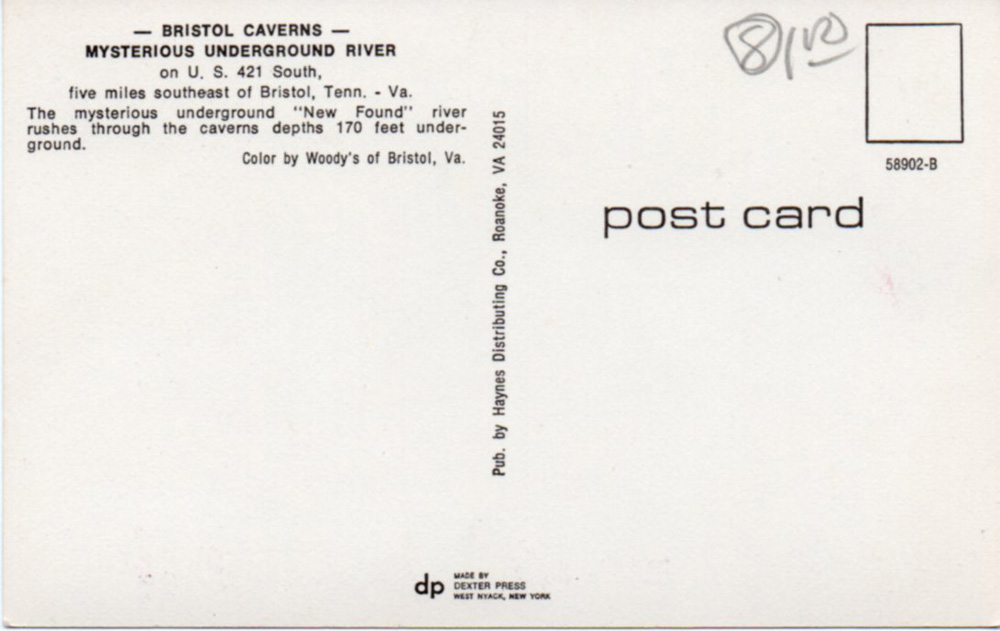
This card was published ten or so years later. It’s a modern chrome postcard printed by Haynes of Roanoke. While much terser, the wording the back is more atmospheric. The top one is a paragraph from a text book – this one is a clever sell piece. I don’t know how “mysterious” the cavern is, but the adjective gets the mood across.

There’s no identification at all on this old picture. When I first saw it, I thought, “Desperado!”
And that may be, but his hat’s on crooked and it’s obvious he doesn’t dress like this very often. He’s wearing suspenders, with both a vest and a coat. The picture was taken outdoors with some sort of drape or side of a tent behind him. It looks like there’s a patch over the seat of the chair. Much used, perhaps.
Otherwise, this man’s identity is lost. I wonder who he was…
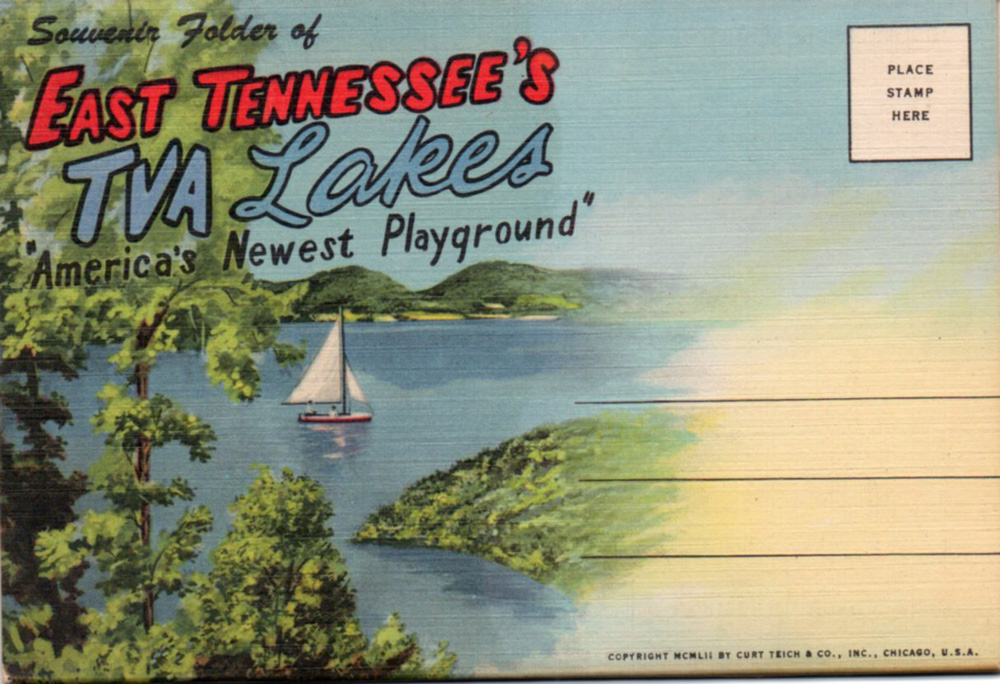
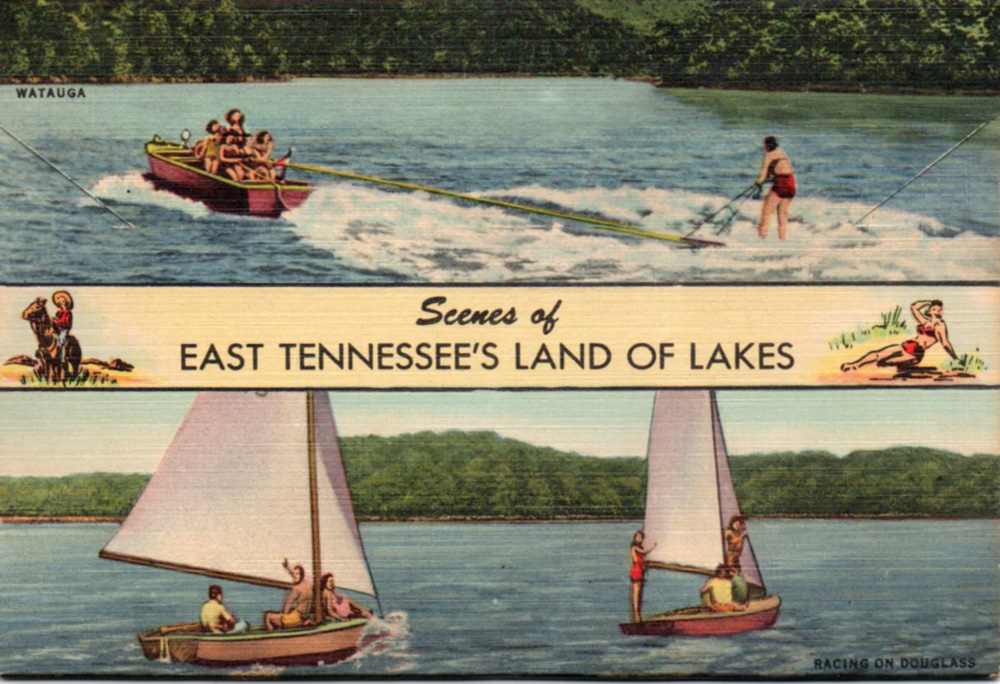
This is a souvenir folder from the Curt Teich company in Chicago. It’s copyrighted 1952. There are 18 views in the foldout portion. They’re on medium stock and not presented as postcards (although I’ve seen some of these views as postcards). The views cover Cherokee, Douglas, Ft. Loudon, Norris, South Holston and Watauga. Included, for fillers, I guess, are Bristol Caverns and a shot of a highway going on to a bridge. Missing is Ft. Patrick Henry because, if these pictures were shot in 1951, that dam was just being built (it was completed in 1953). As I’ve mentioned before, these pictures were shot in black-and-white and were then colored, a little clumsily, at the Curt Teich facility. The colors, then, are mostly imaginary; although, the photographer would have made color notes for each shot.


This is a photo montage. I’ve seen the same aircraft with different backgrounds. The craft is a Boeing 727-232 delivered to Delta in 1973. Delta flew it for 11 years, the it went to People Express, then Continental and finally to Kitty Hawk Aircargo before it was scrapped in 1999. It’s N453DA.
The card is probably one published by Delta and included in the “Welcome Aboard” folder passengers were given. The card may date to the early 70s.
I didn’t pay $2.50 for it. Everything at the antique store was half off that day. Surprisingly, this one was actually in the “Aircraft” section of several boxes of cards.


Hermitage Art Company in Chicago was founded in 1924, mainly printing religious items, but soon were also in the postcard business (and as of this date, still cranking stuff out). This card probably dates from the late 20s to early 30s. The style seems to indicate that, since it’s in the white border era, pre-linen finish. One cent carried on to the 50s, so that’s no help. I wish dealers wouldn’t scrawl things on the backs of cards.

This rock face on Stock Creek Road near Mabe VA does rather resemble President Trump. Sort of…

This is a mailer from Freeport (IL) Hardware Company, probably in the 60s, promoting Du Pont’s Duco enamel for household use. It had been formulated as an automotive paint in the 20s.
What I thought amusing about the card was the thought that someone, blinded by the intense contrast between the green and the orange, would overlook that somewhat disguised step up into the dining room and faceplant on the shiny black floor.

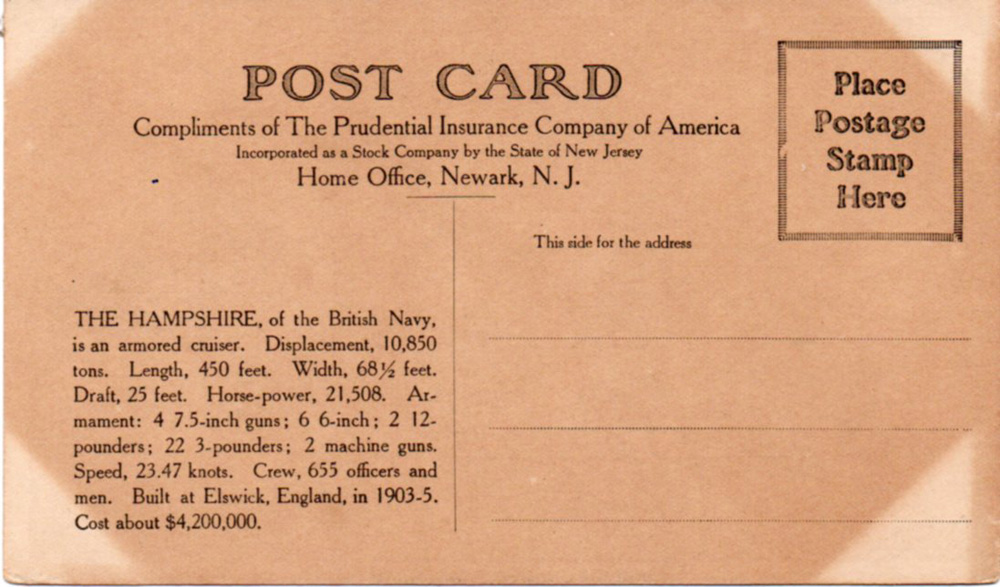
The cruiser was launched in 1905. This card dates from around 1910. The cruiser was lost in a U-boat-laid minefield off the Orkney Islands on June 5, 1916. 643 men, including Lord Kitchener – on a diplomatic mission to Russia, were lost. Twelve survived.
The front shows some fading but the overall condition of the card is very good. Apparently, it was kept in a common picture album. The browning on the back is probably from the acidic stock of the album pages.
The Prudential Insurance Company issued quite a few postcards around this time, but this one could be an R3. It’s available on the web for around $20, in mint condition.
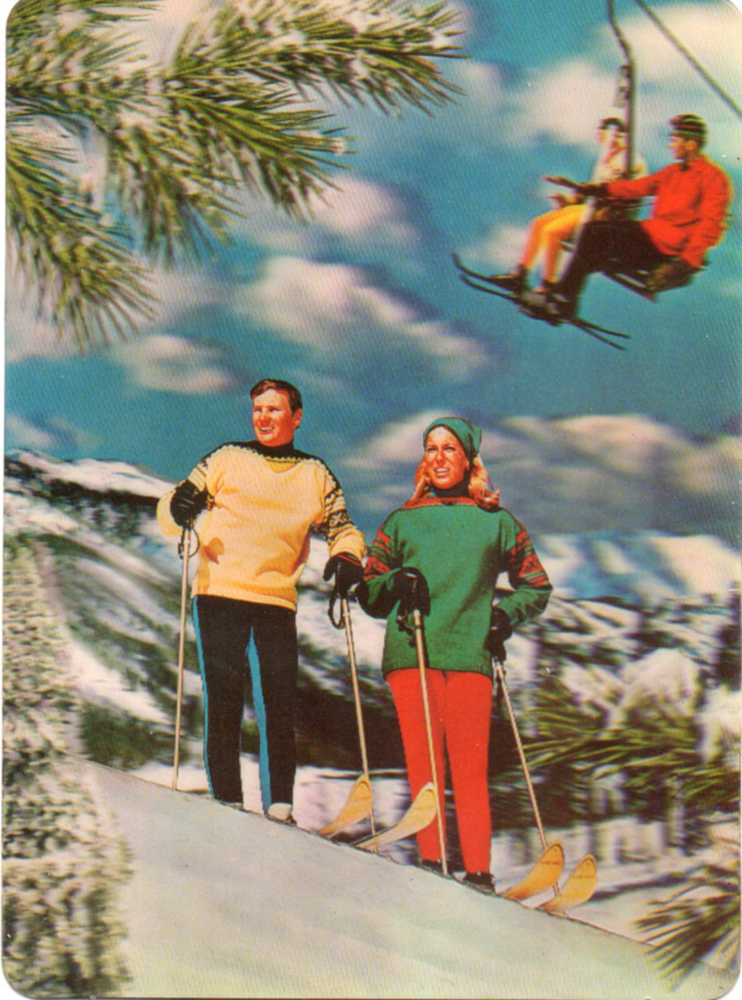

Well, it’s kind of 3-D. But it’s more a bit of 2-D fakery. There are two planes in this lenticular post card (parallax panoramagram, a word that’s as delightful as “bananarama”), the front one with the pine needles, the perplexed-looking skiiers, and the two riding the lift. The second layer is the background. Moving the card gives a feeling of 3-D, if you’re a kid and have never seen 3-D before…
Anyway, it was published by the Manhattan Post Card Company, in business from 1928 to 1974. The Xograph process was patented in 1964 (the patent expired in 2008). It’s 6.5 x 4.75″.
A friend of mine found four of the these 3-D Collector Series cards at a garage sale. On the market today, they’re worth about $2.00 each.


Avianca Boeing 720-B. The plane left Boeing in 1961 for Lufthansa, then to Pan-Am and, in 1973, to Avianca. Avianca moved it on to SAM Columbia in 1977 and, after a stint of private ownership, it was scrapped in 1980. Its tail number here is HK-677. HK-677 for Avianca was previously carried by a C-47 that edged off the side of the runway on takeoff in the 60s and caught fire. All passengers got out safely, but the plane went out of service.
The center credit line on the back shows this is a Banco de fotografias Movifoto out of Medellin. The card size is Continental (103 mm x 150 mm) (4″ x 6″ sort of).


This guy’s a dude. Note the scarf tie, popular in the 1920s. Driving cap in plaid, striped shirt. Sleeves rolled up. Good shoes. Odd expression, but photography was still new then.
I haven’t a clue as to where this studio photo was taken. However, it’s a Real Photo and the AZO square (on the back, upper right) with two triangles pointing up and two triangles pointing down indicates that the photographic paper was made between 1918 and 1930.
You go, guy.
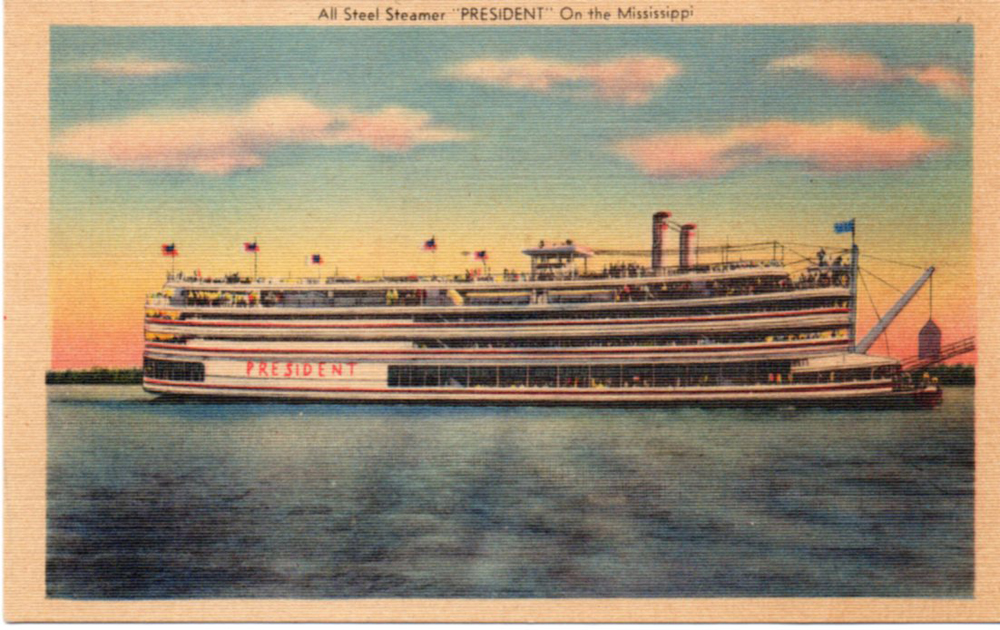
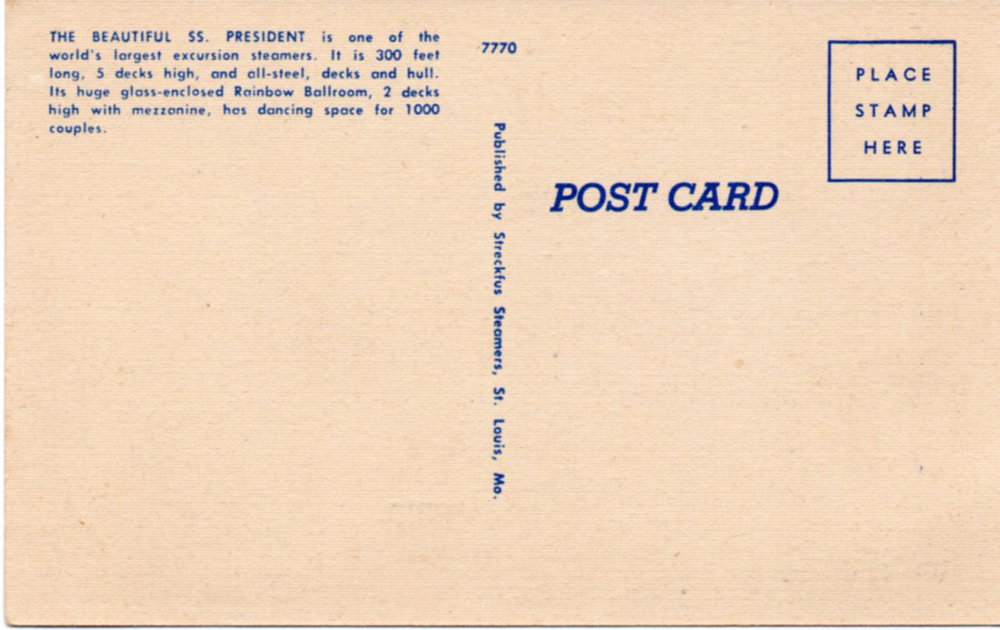
This actually is a riverboat named “President”, but this picture of it was taken after 1978, when it was converted from steam to diesel and had some other modifications made. What’s left of the old boat under all that steel came together in 1924 as a packet boat called “Cincinnati”. It originally had side paddle wheels.
The center credit line “Published by Streckfus Steamers, St. Louis, Mo.” is just the name of the company that owned the boat. I have no idea who printed it.
The boat, at last noticed, was lying dismantled in St. Elmo, IL.


The mighty Boeing 707, delivered to El Al in 1965 and retained in service for decades. This 707 is sporting the 1960s livery (there is some wacky information on the web about the dating of this card). The card is a company issue, printed in Israel.

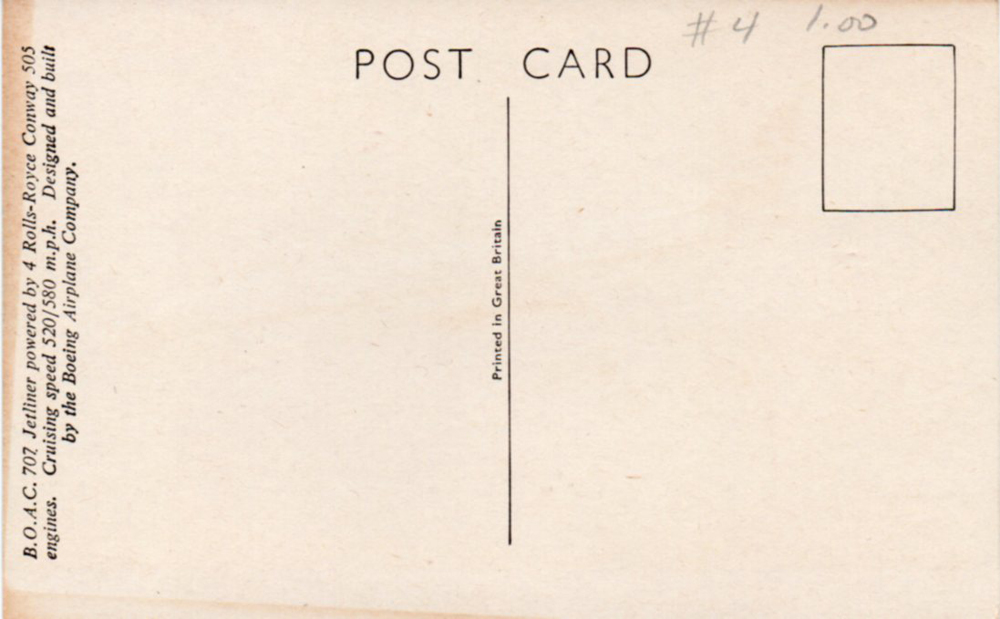
British Overseas Airways Corporation, incorporated from Imperial Airways and British Airways in 1940.
“Speedbird” was B.O.A.C.’s callsign until 1974, when B.O.A.C. was folded into British Airways (callsign: “Speedbird”).
This is more than likely a Boeing 707-420 with the Rolls-Royce Conway 505/508 turbofan engines. The card dates from the early 1960s or so, when B.O.A.C. began adding the 707-420 to the fleet.


In 1957, when this mailable listing of flights and costs (Knoxville to Washington DC – $28 and change) was printed, Capital was flying high with their Vickers Viscounts (eventually foreclosed on by Vickers). Hard times were soon upon the company and it was sold to United in 1961. The piece is 4 x 9″, folded.
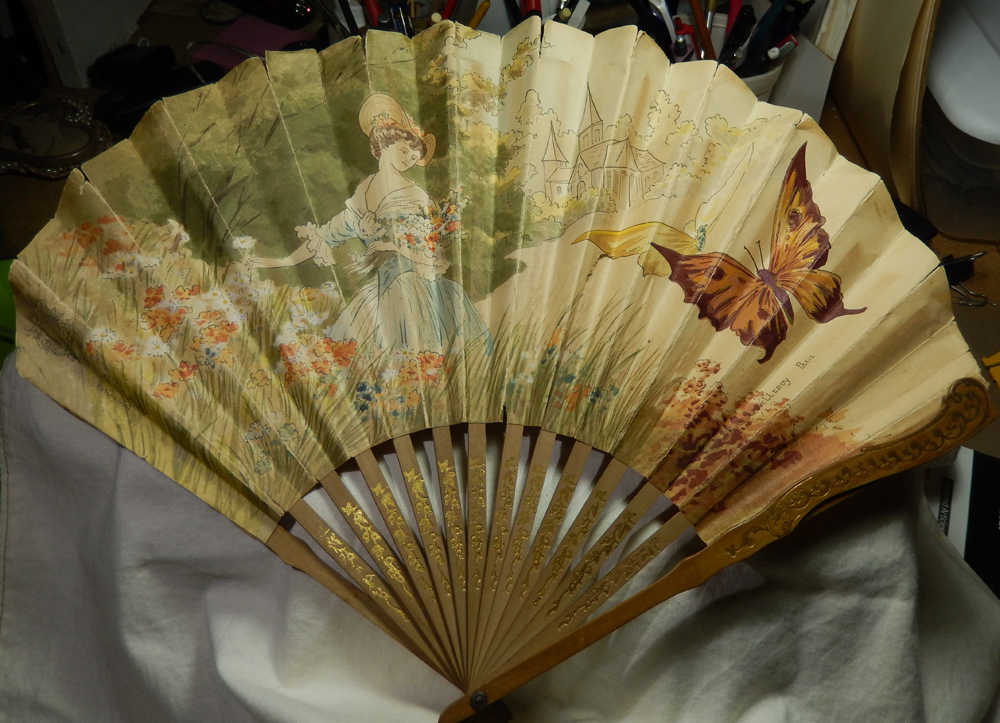
This lovely French fan, in paper and very fragile, dates from the early 1900s. At the lower right is “Eventails Duvelleroy” (“eventails” is “fan” and “Duvelleroy” was the company that made the fan. Over on the left side, there’s a sketch of two men, one on either side of what appears too be a crest. Each man is wearing a sash and they both have walking sticks. Then “Hotel Knickerbocker Restaurant”. The Knickerbocker Hotel was only in operation from 1906 to 1920.
Duvelleroy returned women’s fans to society in Paris, after they’d been out of fashion since the late 1800s. They’re still in business producing remarkable fans.
Every time I open this 14″ fan, something falls off. It’s the paper backing, not the mount, that’s coming apart. The gold pressed details on the guards is still visible. All in all, pretty good for a centenarian.
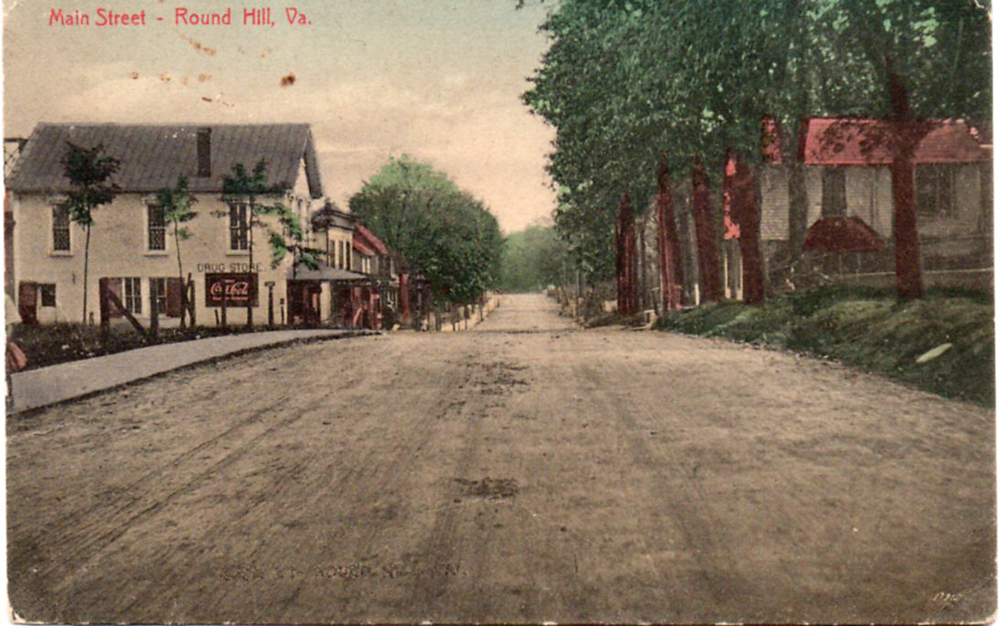
Round Hill VA came about in 1900 as a terminus for a railroad line. The town is on Hwy 7, NW of Washington D.C.
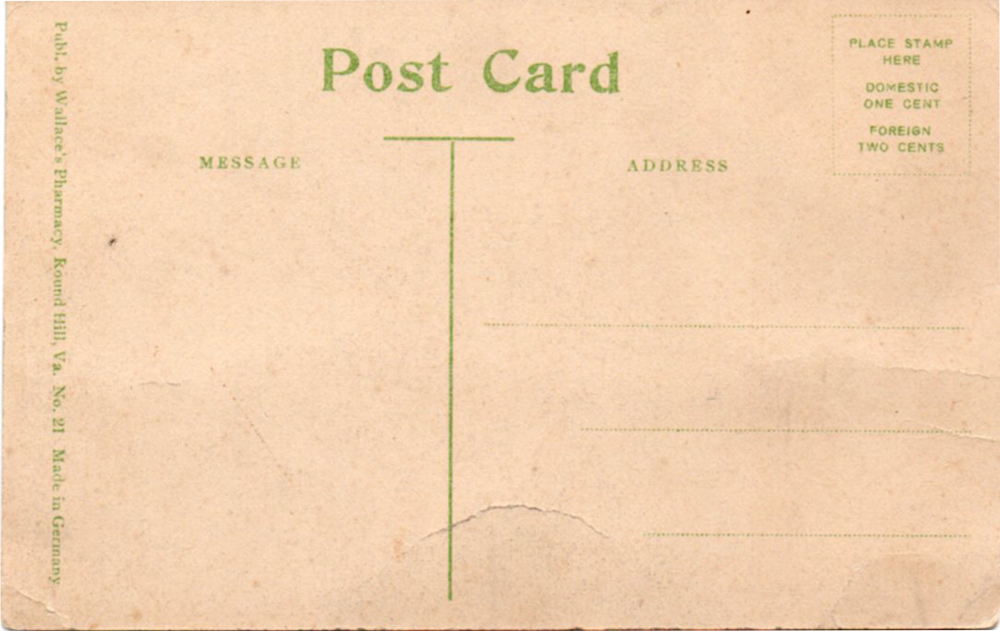
This card is well over a century old. It is one of those fine, German-printed cards from before the start of WWI. A broad, general guess would put it to 1910 or so.
On the back: Publ. by Wallace’s Pharmacy, Round Hill, Va. No. 21 Made in Germany
That’s Wallace Pharmacy with the Coca-Cola sign on the left. The card is in pretty good shape for its age.

Just a bunch of wild and crazy guys there in the Jolo P.O. (with lots of cautionary signs, too)
Photo by Lee Stone
 Uncle Bob's Pix